Kenya exports up to 17 tonnes of miraa daily to Somalia, government confirms
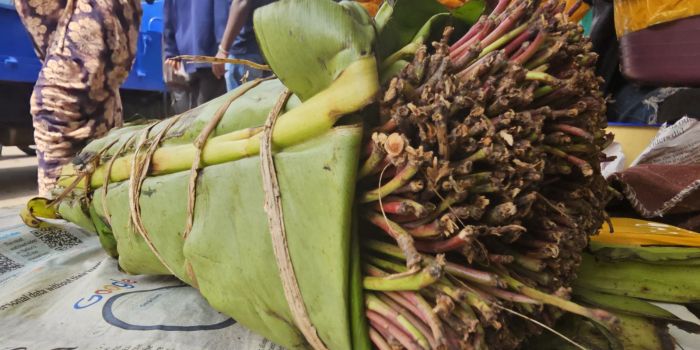
The Ministry of Agriculture's estimates show that there are about 110,000 farmers growing khat in 360,940 acres of land, benefiting over 1.4 million people who are engaged directly or indirectly.
Kenya exports an average of between 13 and 17 tonnes of miraa to Somalia daily, according to the government.
Agriculture CS Mutahi Kagwe on Wednesday said the quantity is determined by the orders received by exporters from the importers in Somalia.
More To Read
- Somalia miraa market shrinks sharply as Kenya’s exports drop by 17 per cent
- Miraa Bill sparks debate over public health concerns, livelihoods in Wajir
- Government steps up push for miraa cooperatives to enhance oversight, security
- Murkomen orders crackdown on reckless miraa vehicles along Mwea–Embu highway
- Kenya secures Djibouti as new miraa export market in major boost for farmers
- MPs demand tough action on reckless miraa drivers
He spoke while responding to questions by Members of Parliament on the product and its market scale, both within and beyond the country.
Kagwe explained that Somalia is currently the main export market for Kenyan miraa following its ban in the European Union and the Netherlands in 2011 and 2012.
"Since the reopening of the Somalia market for Kenyan miraa in July 2022, the country has exported a total of 17,036,558 kilos of fresh miraa by October 2025," the CS told the legislators.
Khat (Catha edulis), popularly known as Miraa in Kenya, is a major cash crop in the country that has been grown, consumed and used for trade for decades.
It is cultivated as a commercial enterprise in Meru, Embu, Tharaka Nithi and Kirinyaga. However, miraa farming is gaining prominence in other counties such as Marsabit, Isiolo, Murang'a, Machakos, Nyeri, Makueni, Kitui, Nakuru, Laikipia, Taita Taveta, West Pokot and Siaya, Kagwe said.
The Ministry of Agriculture's estimates show that there are about 110,000 farmers growing khat in 360,940 acres of land, benefiting over 1.4 million people who are engaged directly or indirectly.
The annual production is estimated at 32,000MT valued at Sh13 billion based on the prevailing market price of Sh400 per kilogramme.
While Somalia remains the largest export market for the miraa produced in Kenya, about 80- 90 per cent of miraa is, however, consumed locally as the rest is exported to different destinations.
"Somalia is the main export market and consumes over 95 per cent of total export volume. Other potential export markets include: Israel, Djibouti, Democratic Republic of Congo, Sierra Leone, Mozambique and Angola," he added.
Asked why the official data on Miraa exports to Somalia remains inconsistent and unreliable despite continuous exports since July 2022, Kagwe explained that the quantities of miraa exported at any particular moment by exporters are dependent on the market requirement, orders placed by the market, space availability in the cargo airlines and produce availability, among others.
"The Ministry, through the Agriculture and Food Authority (AFA) and other partner government agencies, facilitate trade by issuing required clearance documentation based on the volumes declared by the miraa exporters. Export data obtained from AFA, KenTrade is consistent since all three agencies have their systems integrated. The final volume that is airlifted is indicated in the air manifest that remains with the Kenya Civil Aviation Authority (KCAA)," he said.
He added that the main entry point for miraa ferried by air from Kenya to Somalia is Mogadishu International Airport, from where distribution to other towns and markets commences.
"Currently, there are no miraa exports to Somalia from Kenya by road or sea that have been recorded since the year 2022," he said.
Kagwe, however, said the government will continue to engage the government of Somalia with a view to getting additional landing rights outside of Mogadishu.
"Discussions are also underway between my Ministry and Interior together with other stakeholders to explore the possibility of export by road, and government agencies (AFA and KAA) together with the miraa traders are working on initiating and facilitating miraa cargo flights from Isiolo to Manda Island, from where traders can service the external market by boat," he said.
After receiving an order, the exporter contacts contracted farmers who conduct the preliminary sorting and grading before it is loaded onto a pick-up and delivered to a Miraa Exporters Field Holding Facility at JKIA, owned by a licensed exporter.
Upon arrival, further sorting, grading and packaging are done in readiness for ferrying.
"Normally, volume prepared factors in any projected losses during transportation, scorching by field heat and final sorting at the warehouse," the CS explained.
This also partly explains why the miraa pick-ups from Meru move at supersonic speed while ferrying the commodity to Nairobi.
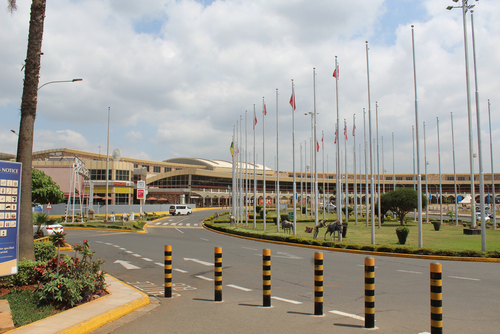
Upon arrival at JKIA exit point, the packages being exported to Somalia are then prepared in three warehouses: Kenya Airfreight Handling Limited (KAHL), Signon and Bluebird.
The fully packaged miraa is then weighed at the designated airline shed by the shipper, and all export documentation is verified by a Customs Officer at the exit point.
"Customs (KRA) is the final agency which releases the consignment based on the manifest provided by the shipper. The Miraa is finally taken to the airside for loading onto the aircraft," the CS said.
Top Stories Today